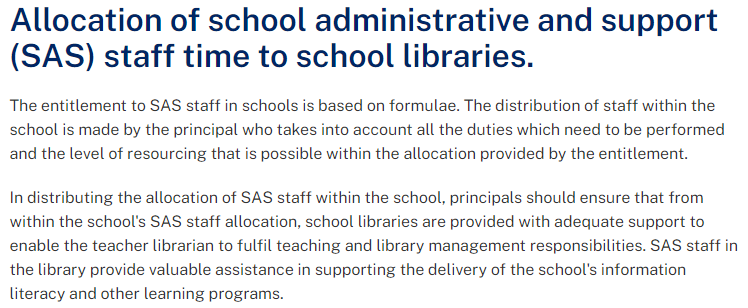
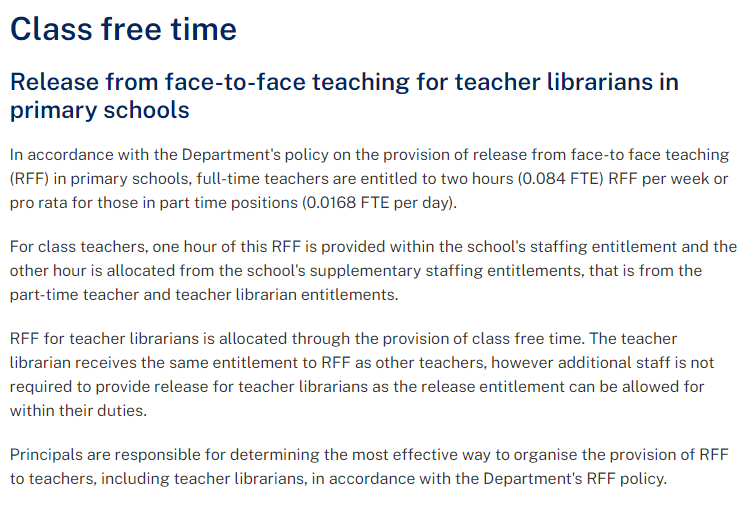
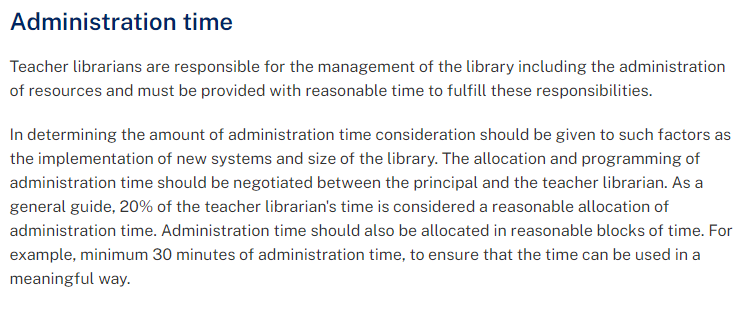
Teacher Librarian Information
Industrial Relations Information
https://education.nsw.gov.au/industrial-relations/a-z-of-industrial-relations-topics/teacher-librarians
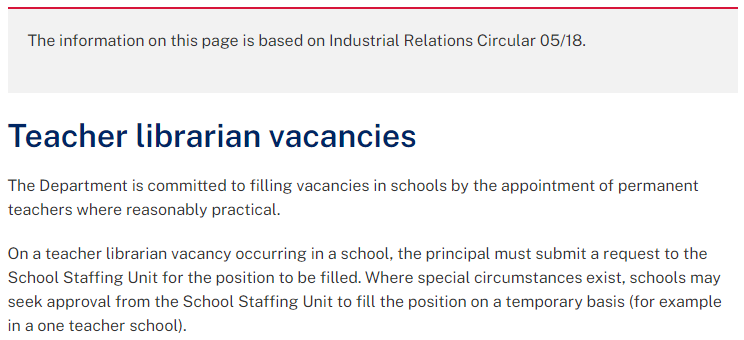
NSW DoE School Libraries page
https://education.nsw.gov.au/teaching-and-learning/curriculum/school-libraries-new
Contact DoE Library Support
Email: [email protected]
This can be used to ask questions and raise issues.
https://education.nsw.gov.au/industrial-relations/a-z-of-industrial-relations-topics/teacher-librarians
NSW DoE School Libraries page
https://education.nsw.gov.au/teaching-and-learning/curriculum/school-libraries-new
Contact DoE Library Support
Email: [email protected]
This can be used to ask questions and raise issues.
STATEMENT ON FREEDOM TO READ
The Australian Library and Information Association, believe that freedom can be protected in a democratic society only if its citizens have access to information and ideas through books and other sources of information, affirms the following principles as basic and distinctive of the obligations and responsibilities of the librarian:
A primary purpose of a library service is to provide information through books and other media on all matters, which are appropriate to the library concerned.
A librarian must protect the essential confidential relationship, which exists between a library user and the library.
The functions of the librarian include: promoting the use of materials in the librarian’s care; ensuring that the resources of the library are adequate to its purpose; obtaining additional information from outside sources to meet the needs of readers; to cater for interest in all relevant facets of knowledge, literature and contemporary issues, including those of a controversial nature; but neither to promote or suppress particular ideas and beliefs.
A Librarian, while recognising that powers of censorship exist and are legally vested in state and federal governments, should resist attempts by individuals or organised groups within the community to determine what library materials are to be, or are not to be, available to the users of the library.
A librarian should not exercise censorship in the selection of materials by rejecting on moral, political, racial or religious grounds alone material which is otherwise relevant to the purpose of the library and meets the standards, such as historical importance, intellectual integrity, the effectiveness of expression or accuracy of information which is required by the library concerned. The material should not be rejected on the grounds that its content is controversial or likely to offend some sections of the library’s community.
A librarian should uphold the right of all Australians to have access to library services and materials and should not discriminate against users on the grounds of age, sex, race, religion, national origin, disability, economic condition, individual lifestyle or political or social views.
A librarian must obey the laws relating to books and libraries, but if the laws or their administration conflict with the principles put forward in this statement, the librarian should be free to move for the amendment of these laws.
The Australian Library and Information Association, believe that freedom can be protected in a democratic society only if its citizens have access to information and ideas through books and other sources of information, affirms the following principles as basic and distinctive of the obligations and responsibilities of the librarian:
A primary purpose of a library service is to provide information through books and other media on all matters, which are appropriate to the library concerned.
A librarian must protect the essential confidential relationship, which exists between a library user and the library.
The functions of the librarian include: promoting the use of materials in the librarian’s care; ensuring that the resources of the library are adequate to its purpose; obtaining additional information from outside sources to meet the needs of readers; to cater for interest in all relevant facets of knowledge, literature and contemporary issues, including those of a controversial nature; but neither to promote or suppress particular ideas and beliefs.
A Librarian, while recognising that powers of censorship exist and are legally vested in state and federal governments, should resist attempts by individuals or organised groups within the community to determine what library materials are to be, or are not to be, available to the users of the library.
A librarian should not exercise censorship in the selection of materials by rejecting on moral, political, racial or religious grounds alone material which is otherwise relevant to the purpose of the library and meets the standards, such as historical importance, intellectual integrity, the effectiveness of expression or accuracy of information which is required by the library concerned. The material should not be rejected on the grounds that its content is controversial or likely to offend some sections of the library’s community.
A librarian should uphold the right of all Australians to have access to library services and materials and should not discriminate against users on the grounds of age, sex, race, religion, national origin, disability, economic condition, individual lifestyle or political or social views.
A librarian must obey the laws relating to books and libraries, but if the laws or their administration conflict with the principles put forward in this statement, the librarian should be free to move for the amendment of these laws.
Important Documentation
| information-all-teacher-librarians.pdf | |
| File Size: | 291 kb |
| File Type: | |
| secondary_and_central_schools.pdf | |
| File Size: | 667 kb |
| File Type: | |
| teacher_librarian_memorandum_dn-05-00277_-_peter_riordan_29_july_2005.pdf | |
| File Size: | 124 kb |
| File Type: | |
NSWTF Teacher Librarian Special Interest Group
Contact: Greg Butler and Gemma Burrows via [email protected]
The Teacher-Librarians Special Interest Group meets once per term.
To be added to the mailing list, please contact Federation on (02) 9217 2100 or 1300 654 367.
NSWTF - Information for all Teacher Librarians
NSWTF - All students deserve access to a qualified Teacher Librarian
NSWTF Teacher Librarian Special Interest Group - New chapter for SIG recognises vital role
NSWFT - Bullying
NSWTF - Complaints Handling
NSWTF - Legal Assistance for members
NSWTF - Violence against teachers
NSWTF - Teacher's Award Update
NSWTF - Members information
Your browser does not support viewing this document. Click here to download the document.